Once your holiday promotion ends, how do you encourage shoppers to return?
A good holiday customer retention strategy gives shoppers a reason to come back without relying on another January promotion. Instead of sending everyone the same offer, retailers can use what they know about their customers to make the next message more relevant.
This guide explains how to plan post-holiday follow-up using direct mail alongside your existing digital channels. It also includes a simple planner to help your team organize messages and measure campaign results.
TL;DR
- Plan your follow-up while your holiday campaign is still running.
- Use purchase history to identify relevant reasons for customers to return.
- Match your message and timing to the next purchasing opportunity.
- Coordinate direct mail with digital marketing to make it easier for customers to respond.
- Track repeat purchases and customer reactivation to see what's working.
Why Do Holiday Customers Need a Follow-Up Plan?
Holiday shoppers have plenty of choices, and winning their business once doesn't mean they'll automatically return.
According to Deloitte Canada's 2026 Holiday Retail Outlook: (1)
- Shoppers expect to visit an average of 16 stores and digital destinations when looking for gifts, up from 14 last year.
- 78% plan to actively seek the best deals, while 77% prioritize reasonable prices and value when choosing a retailer.
- 29% intend to spend less this year.
These findings show how carefully consumers are approaching holiday spending. For retailers, the challenge is keeping customers interested once the seasonal promotions end.
Which Holiday Customers Should You Follow Up With?
Start by reviewing your holiday customer records and looking for opportunities to encourage another purchase. Identify first-time buyers, returning customers, and previously inactive customers who returned during the season.
For example, a home goods retailer might approach its holiday customers differently:
|
Customer purchase |
Follow-up opportunity |
Suggested approach |
|
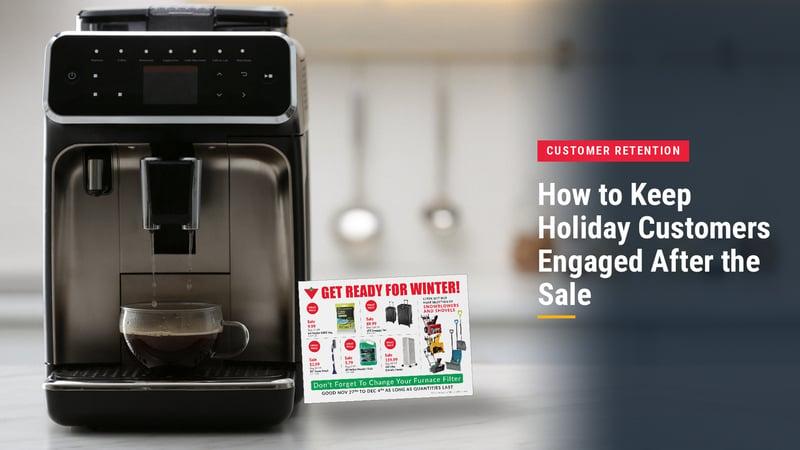
Coffee machine |
Accessories or replenishment products |
Send an addressed mailer featuring compatible filters or coffee products a few weeks after purchase. |
|
Bedding or home furnishings |
Complementary products |
Introduce coordinating items in a January collection, with a link to shop online. |
|
Holiday decorations |
Future seasonal purchases |
Wait until the next relevant shopping period rather than sending an unrelated January discount. |
These examples show why not every holiday customer needs an immediate follow up. A customer who bought a coffee machine may have a reason to purchase accessories soon afterward, while someone who purchased Christmas decorations may not need another seasonal offer for months.
It goes without saying, but before finalizing your audience, check whether the products or services you plan to promote are still available in the relevant stores or markets.
Planning Your Post-Holiday Customer Follow-Up
Once you've identified your follow-up opportunities, you can now build a campaign around them.
Use the planner below to decide when customers should hear from you and what action you want them to take. Take note that you don't need to use every stage. Choose the touchpoints that make the most sense for your customers and their purchasing habits.
Post-Holiday Customer Follow-Up Planner
|
Stage |
Purpose |
Your message |
Timing |
Digital next step |
How you'll track it |
|
Thank you |
Acknowledge the purchase and build goodwill |
||||
|
Second purchase |
Encourage customers to shop again |
||||
|
Seasonal reminder |
Reconnect before the next relevant shopping period |
||||
|
Reactivation |
Reach customers who haven't returned |
Example: A home goods retailer could send a thank-you mailer with product care tips and a QR code linking to a helpful guide. Later, it could introduce complementary products through a targeted offer that directs customers to a campaign landing page.
If you have previous purchasing data, use that to estimate when customers might be ready to buy again. If you don't, start with a reasonable timeframe based on the products you sell and test how customers respond. You can then use those results to refine the timing of future campaigns.
Connecting Direct Mail With Your Digital Follow-Up
Once you've planned your follow-up messages, the next step is deciding how to deliver them.
For retailers reconnecting with known holiday customers, addressed mail can deliver offers based on existing records. Neighbourhood Mail™ , meanwhile, can extend a related campaign to households in selected areas around your store.
Whichever approach you choose, make it easy for recipients to take the next step online. If you're promoting a complementary product, direct them to a relevant product page rather than your website's homepage. If you're offering a discount, make sure the landing page explains how to redeem it and whether it applies online, in-store, or both.
💡Expert tip: Before launching, test the destination page on mobile and confirm that the advertised offer matches what customers will see online. A QR code may bring someone to your website, but a confusing landing page can still prevent them from completing a purchase.
For more on connecting the channels, read Deepening the Connection: Direct Mail as the Omnichannel Glue
How Do You Know Whether Follow-Up Is Working?
You can measure the success of your post-holiday follow-up campaign by tracking how many customers return and make another purchase. QR scans and website visits can show initial interest, but repeat purchases are a stronger indicator of customer retention.
Before launching, decide what success looks like for your campaign:
- Repeat purchases: Track how many first-time holiday buyers make another purchase after receiving your follow-up.
- Customer reactivation: Measure how many previously inactive customers return after the campaign.
- Campaign engagement: Monitor QR scans, landing page visits, and offer redemptions to see how customers respond. Remember that engagement doesn't always lead to a sale.
- Performance by market: Compare results across locations to identify where your approach is working and where it may need adjustment.
Where possible, compare results with a similar group of customers who didn't receive the mailing. This can help you assess whether the campaign generated additional purchases rather than simply reaching customers who would have returned anyway.
Use what you learn to improve your next campaign. For example, if customers visit the landing page but don't make a purchase, consider testing the offer or the page itself before increasing your mailing frequency.
FAQs
When is the best time to follow up with holiday customers?
The best time depends on what customers purchased and when they're likely to need something else. Retailers selling frequently purchased products may have opportunities to reconnect within weeks, while those selling furniture or other major purchases may benefit from waiting longer. Review previous purchasing patterns to determine the right timing.
Do discounts help retailers increase repeat purchases after the holidays?
Discounts can encourage repeat purchases, but they're not always necessary. Depending on the purchase, retailers can share useful product information or recommend complementary items. The goal is to give customers a relevant reason to return without relying on another promotion.
Make Holiday Customer Retention Part of Your Marketing Strategy
The end of the holiday season doesn't have to mean the end of the customer relationship. With a thoughtful follow-up plan, retailers can build on their holiday sales and create more opportunities for repeat business.
The key is to make each follow-up relevant to the customer rather than simply extending the holiday promotion. Use what you've learned from their purchases to guide your next campaign, and adjust your approach based on how customers respond.
Source:
(1) Deloitte Canada, 2026 Holiday Retail Outlook: The Season of Savings, 2026
Comments